
User Tools
Sidebar
Cause of Butt Pain
from facebook post:
Surfski Kayak
Paul Tomblin ·
·
I have a problem sitting[1] which means I haven’t managed to paddle since last fall - even then it was quite painful but I grinned and bore it until the end of the racing season. I tried once in the spring and got 20 minutes and I was in absolute agony by the end of it.
I have a memory foam pad that allows me to sit in a chair for a while, but even then it’s a bit painful. Today just for a test I tried paddling with the pad, and while it was a lot less painful, it was also very thick so it made me very unstable in the boat, and it also tilted my hips back so I couldn’t sit up, nor could I get rotation. But if I shoved it so it was half behind me and half under me, I was actually able to paddle for nearly an hour with only minor pain. But the pad got water logged and absorbed about 5-10 pounds of water.
Does anybody have a seat pad recommendation?
Depend on which doctor you talk to, it might be the ischial bursa, the sciatic nerve, the performis muscle, another smaller muscle just below the performis, or the hamstring, but so far it hasn’t responded to any treatment for any of those conditions.
Robert Hartman
What about an inflatable seat pad? I have a thermarest version.
Adam KingtonClay
When I used to do marathons I used a closed cell neoprene pad about 12mm thick.
I'd also recommend a sports physio or very skilled Sports massage therapist - you want someone who understands that you're an athlete for whom “just rest” and “it could be x or y” guess doesn't suffice.
You want to remain active and you want to not only heal, but prevent the issue from recurring.
Mobility testing should determine what the underlying issue is.
The seminal text linked below illustrates how methodical testing will identify very accurately what muscles are involved (weaknesses, injuries, tightness etc).
There's no need for guesswork.
From your use of language I'm guessing you're in the US, meaning medical advice might be expensive. It could well be worth getting the text book and asking someone to assist you with the tests etc as a cheaper option.
Good luck.
https://www.booktopia.com.au/musc.../book/9780781747806.html
Muscles: Testing and Function, with Posture and Pain
Paul Tomblin
Adam KingtonClay I’m in the US but I have really good insurance. I’ve had 5 MRIs and a couple of X-rays and I can’t count how many doctors visits (but I’m guessing at least 20) and physical therapy from pretty good sports medicine physical therapists in the last 6 months. Still no diagnosis. Still no treatment. My neurologist has tried 3 different drugs and none have given me any relief - gabapentin made me dizzy, amatrypiline (?) made me sleep all day, and doxycycline gave me tachycardia. None of them helped the pain.
Adam KingtonClay
Paul Tomblin that's intense brother!
This might sound odd… did you have Covid pre symptoms?
The emerging information about neuropathic pain post Covid is worth considering.
Another line of enquiry for pain after sitting in the lower back is iliopsoas. Shortening here is very common, often overlooked. It can (not always) also present with symptoms similar to irritable bowel.
People with generally shortened/tight iliopsoas often look like they have a “duck's bum” with belly hanging forward, tight hamstrings and their thighs look short (ie trucker's posture) - due to anterior pelvic tilt.
Other symptoms include headaches (due to body tilt corrections up the spine) and difficulty straightening up when standing.
An imbalance with one side shorter than the other can cause headaches on one side, the aforementioned tummy issues (if short on the left), and a scoliotic “S” curve in the spine (due to lateral and lopsided anterior pelvic tilt). If you lie flat on the ground with body straight, someone placing their thumbs in equal positions under your left and right ankles will likely notice one thumb (hence ankle) is lower than the other giving the appearance of leg length difference - this is due to an uneven pull on hips creating the apparent shortness.
People with this often sit with their legs/knees pulled up to relieve the pain. Now, I don't know if this is the case, but it's a commonly missed issue.
The simplest remedy is simple lunge stretches for the iliopsoas done regularly. The trick is being mindful enough to isolate the iliopsoas and not allowing little movement “cheats” to let the muscle group escape the stretch.
Again I don't know and I'm not diagnosing, just providing some information for consideration.
https://www.kenhub.com/.../anatomy/iliopsoas-muscle….
Iliopsoas muscle
James Michaels
Maybe try a seat from a OC 1 ? They are made to be wet. Nelo, Puakea designs, Ozone might have them.
Mike Staninec
I had a similar problem over 20 years ago that never went completely away. It was acute for most of a year and I saw several doctors: orthopedic, chiropractic, acupuncture and sports medicine. Only the sports medicine doc made a slight dent in the symptoms by prescribing some stretches and hamstring exercises on the assumption that it is the hamstring attachment to the ischeal tuberosity. Later I went to a very talented physical therapist who did me the most good by far with extensive hamstring work for several months. The problem never went completely away. If I sit on a hard chair I start hurting in 5 or 10 minutes but on soft chairs I'm fine, so I carry a cushion. For paddling I have custom padded neoprene pants: one pad above and two pads below, with a 1“ gap right over the ischeal tuberosities in seated position. A recent MRI for an unrelated purpose showed that the inflamed area is actually the gluteus tendon, very close to the hamstring tendon. My recommendation: 1. MRI with gadolinium contrast to pinpoint the problem. 2. Physical therapy based on those findings, 3. Custom padded pants.
Anthony Rodier
Physiotherapist here Paul. Yes there are a range of possible causes but the main issue is you haven't found the person who can diagnose it and treat it properly. In Australia a Sports Physician would find the problem and likely refer you to a decent Physio to rehab it.
Greg Cole
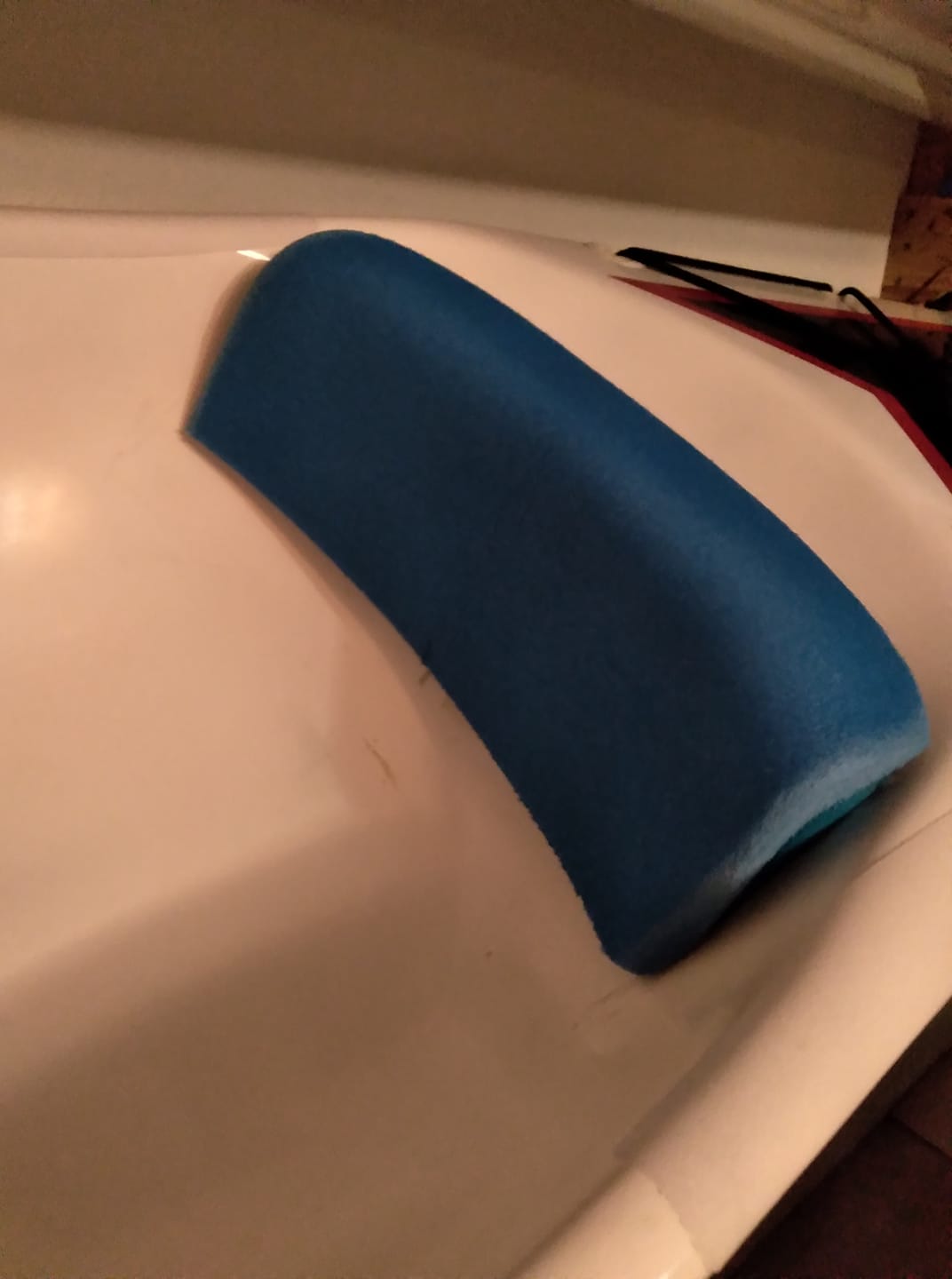
I use a padded wedge across the back of my bucket to roll my hips forward and put more meat under my sit bones. It allows me to sit in the bottom of the bucket and still rotate somewhat. May be an image of saddle-stitched leather
Melinda Edward
Try Skwoosh. It really helps me.
Kerry Wilson
You may find that closed cell foam does the job if you cut out the area where it hurts to relieve the pressure. The pad may be softer than the ski but it still applies pressure, cutting away the area relieves the pressure and stops the irritation which makes it swell.
Mark Nye
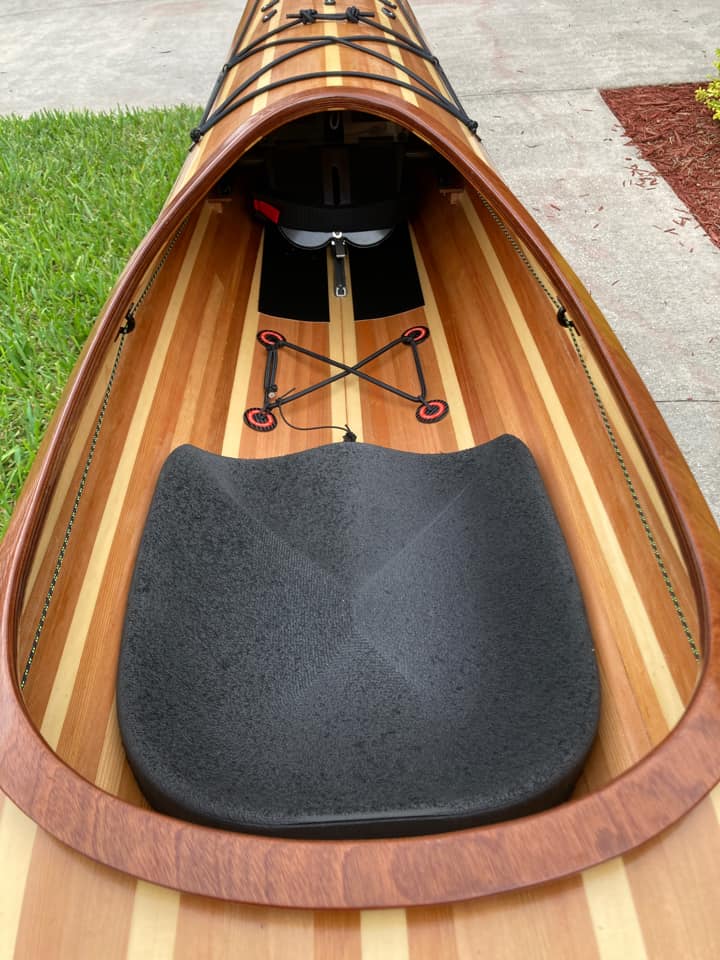
The Skwoosh pad is very good. You could also try the Deakbeater padded shorts designed for dinghy racers. I have used both in my surfskis. As an alternate approach, have you considered a decked boat? Lack of a fixed Surfski cockpit allows you to carve the perfect closed cell foam seat for your bottom. Picture is a Bjorn Thomasson Surfski hull with a regular deck that I built. Handles exactly like my SEI but much more comfortable.
Edward Gifford
Just an idea I would run by the doctor. Could you patially inflate a small inner tube to sit on. It will take a lot of experimentation to find the exact pressure needed and may cause a bit of instability but it sounds like it might be worth a shot! Good Luck!
Bruce McManus
Is this pain isolated to your sit bones? I have this problem and have found a solution with a home made pad.
Paul Tomblin
Author
Bruce McManus Oddly, it’s just on one side. But yeah, if I press on the painful area if feels exactly like the sit bone, although the physio therapist explained to me the reason all the doctors have different ideas is because there’s so much happening in that area, where the sciatic nerve can pass either behind or between the performis muscle and there is a bursa right under the sit bone and any one of them could be the source. I’d like to hear more about your home made pad.
Bruce McManus
Paul Tomblin I’m happy to tell you what I did and send a few pictures. It worked for me to the extent that I would not have been a paddler if it hadn’t worked out. I ll take some pictures tonight.
Graham Boys
Try some sessions at a Kinesiologist. I had hamstring issues and now once a year for a routine session for my wellbeing.
Andy W. Stephens
Paul, I think my own problem is from the Obturator internus, a 'horizontal' muscle which is 2 muscles below the Pyriformis. But like you & others have commented, there are many possible causes. Tilting my kayak seat down towards the front helped a lot. A seat pad helps too. When I tried a Fenn XT ski, I no longer had a problem. I used to get sore by 15 km in my kayak with modified seat. But using my newish Carbonology Boost ski I have gone 30 km with absolutely no pain !!!


